Sunday, April 30, 2017

Standards and Curriculum

Our school follows a curriculum from Focused Instruction for our reading instruction. The curriculum that is given either feels too constricting since it does not take into account the experiences and culture of my students or it doesn’t actually hit on all the standards. Due to this, when planning and instructing, we have to make sure that we adapt the curriculum we are given to meet our students’ needs or to even just meet certain standards that are not reached with the curriculum. The standard 5.10.4.4 (exemplified in the screenshot below) identifies using roots and affixes as a context clues strategy to determine the meaning of unknown words. Nothing within the curriculum has us explicitly teach this standard in a unit. The evidence below shows how we took standards that we were given and adapted curriculum to ensure that students were receiving the appropriate instruction.  
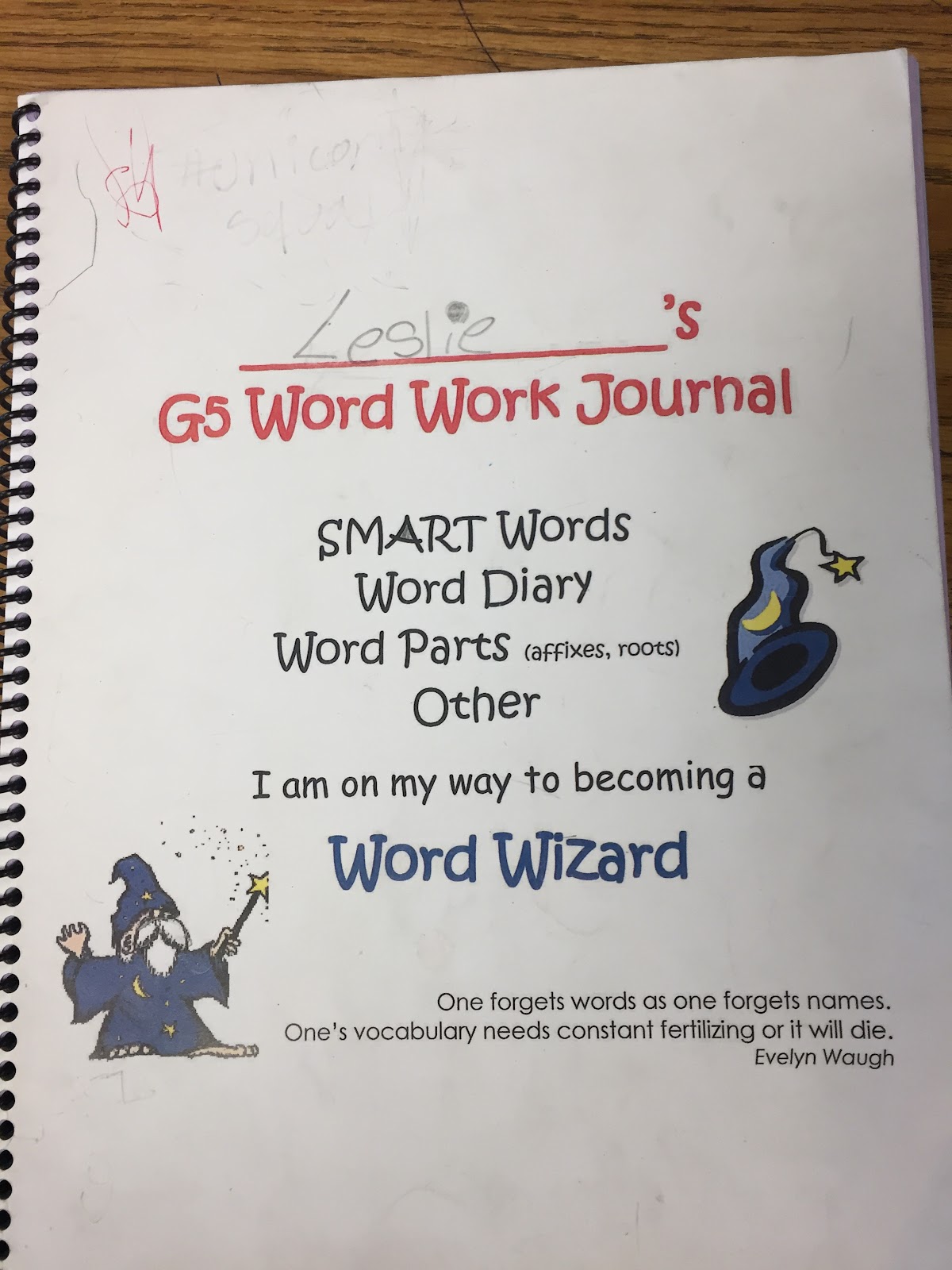
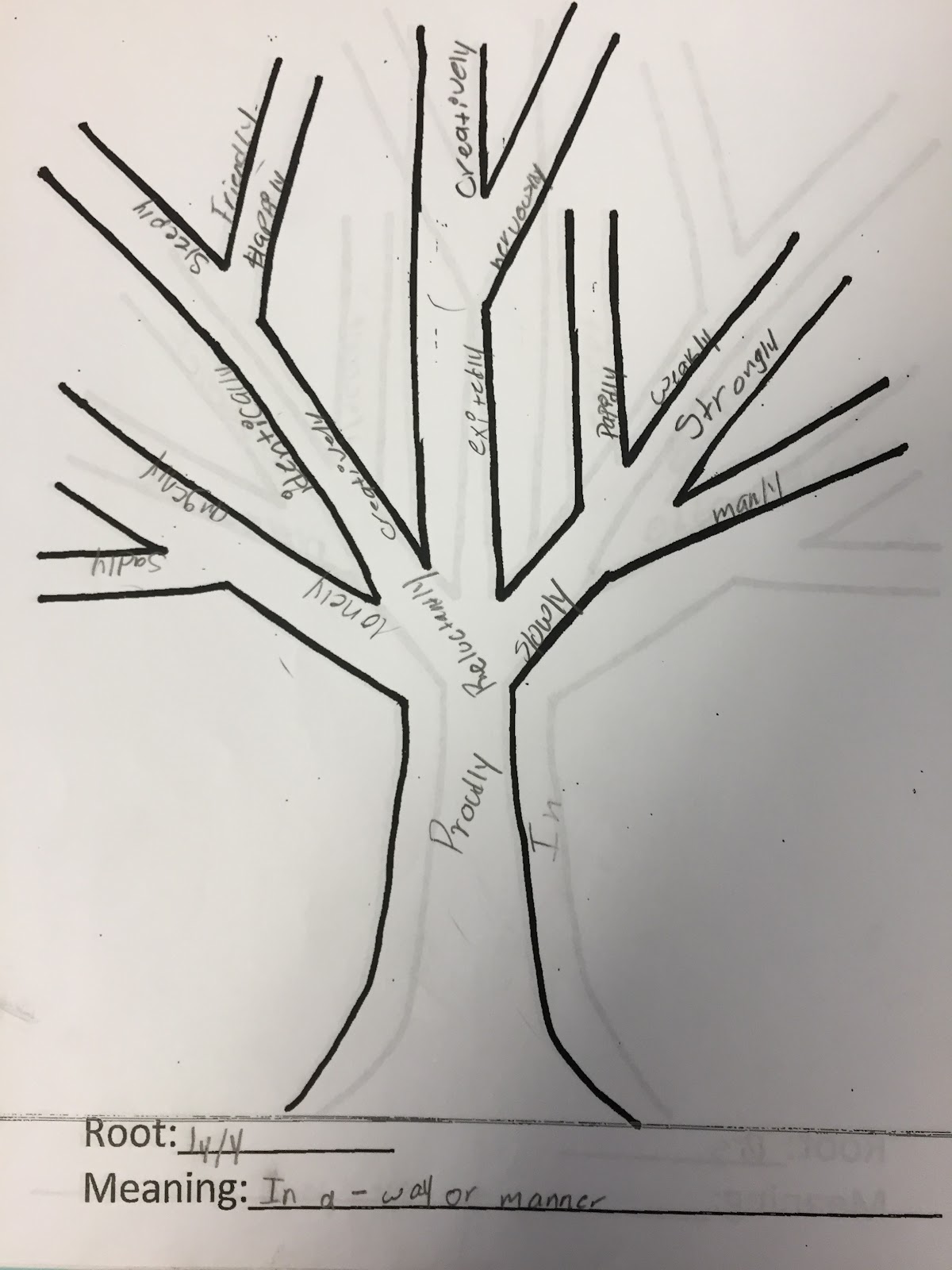
Since our curriculum did not provide any explicit ways to teach roots, our team decided to create our own ways to ensure students were learning the material. The curriculum stated to have students “use context clues” to find meaning of unknown words in “Esperanza Rising”. In order to scaffold this more, the first change we implemented to the curriculum was the creation of a “root wall”. The root wall (pictured below) allowed us to incorporate roots into everyday learning, rather than just a one-time experience. According to Barbara Moss in “Making Independent Reading Work”, it is important for students to learn words contextually rather than out of context like memorizing vocab words. Therefore, we do a mini game to introduce a new root for the week and put it above the root tree. Then, as students find the roots within their own independent reading books, they put it on the root tree along with a definition. The root tree has helped students take ownership over their own words and use strategies contextually. We also have students record this in their journals.
The second adaptation we made was the creation of a root word wall. While students were finding words contextually, we also wanted them to be familiar with an abundance of words within each root. Students created the word wall (pictured below) on their own by finding five words that contains the root and writing the definition on it the paper.This helped students understand how the definition of the root was embedded into the definition of the word. For example, students knew “mis” meant “not” and “mistake” meant “Not doing something correctly.” The word wall has helped students think of creative words and the process of creating definitions.
Last, we took all of these strategies and as we are reading “Esperanza Rising”, we have students use the strategies of roots to understand the meaning of unknown words. Rather than doing what the curriculum suggested and just teach students to find roots within words, we adapted the curriculum to implement scaffolds that would allow students to be successful based on where they were at coming into the school year.





Sunday, April 16, 2017

Classroom Management

After spring break I thought a lot about classroom management. I wanted to make sure that after a week off of school, students were still held to the same expectations and were following routines that were set at the beginning of the year. Therefore, I’ve been trying to find a couple strategies that I can try in my classroom after the break to ensure that the classroom is still following Edtopia  listed multiple strategies that I was interested in trying out in the classroom.
I can sense that my students are beginning to get bored with repetition and are especially antsy near the end of the year. It doesn’t help that we are doing a lot of test preparation right now as well. One of the first things the article suggests, and what stood out to me the most, is “Follow the first step of hypnosis”. The idea being that it is much easier for students to focus on something they’re already doing rather than being told to do something different with multiple steps involved. Often times I have students freeze and give multi-step directions, hoping for the best. The idea with the hypnosis technique is that you can give students an easy in. For example, I have started doing a countdown and ask students to point their eyes towards me. I give no further directions until I see 100% compliance. Then I give further directions about what I need next. This strategy has been working a lot better because normally when I do a countdown from five, students are already looking at me so to say “point your eyes toward me” is an easy in that doesn’t waste much time. That way they are also ready to hear next steps from me and aren’t distracted by anything else.
The second thing I’ve noticed is that after lunch and recess, my students tend to be extremely energized. The quiet, calm feeling from the morning seems to go out the door after lunch and it takes extra energy on my part to instill that same sense of calm. Even just coming through the classroom door, students have a sense of energy that wasn’t there in the morning. I liked number 5 on Edtopia and wanted to try it out. The author had each child line up outside the door before entering and answer a content related question before being allowed through the door. I really liked this idea because it could be a good way to review content before MCA’s, it would be a calm way to enter the classroom and each of them can independently get started on the prompt on the board without getting distracted by each other. If they don’t follow these expectations exactly, they get sent to the back of the line which annoys them so this typically works out well. Based on this tip, I’ve noticed that students are excited to anticipate what the question might be as they come up the stairs, are less likely to get distracted by each other in the classroom and naturally calm themselves down. It has become less taxing on my part to calm them down.

While I have been focusing on incorporating these two strategies into my classroom, it takes time. According to Harry Wong’s research in effective classroom management, teachers should use a three-step approach for teaching classroom procedures. This includes explaining, rehearsing, and reinforcing (repetition) until students have it be a habit or routine (The First Days of School). So, before I started the line up and ask questions routine, I explained to students what it would look like, why we are doing it and expectations on following the routine. After explaining, we rehearsed what it would look like and repeated it every day until we got in a routine of doing it. What I liked about using this article to inform instruction is that it’s never too late to introduce new routines and have a classroom reset. While it is helpful for it to happen within the first  months of schools, it works just as effectively near the end months of school too.

Friday, March 31, 2017

Teaching as a Profession

Coming into Teach for America I had preconceptions about what teaching would look like. I thought it would be fairly straightforward, I would teach students academic content on math, reading, writing, science and social studies. I thought it would involve grading papers and giving feedback. However, the entire experience became significantly different than I had originally envisioned. I realized that as an educator, my voice can leave the four walls of my classroom to impact change in a different sphere. That teaching as a profession means also being an advocate for your students. The way I found myself doing this to the fullest potential is advocating through Educators 4 Excellence where I can use my writing to spread awareness. This article I wrote for MinnPost serves as an example of how I realized my voice and passions can serve as a pathway to greater advocacy as a teacher.
I realized as a teacher I wielded a lot of power in how we communicate expectations and carry out discipline practices to students. In the article I was able to call on personal stories that helped me take what I was learning in the classroom to a more public sphere. The opening story about Jeremiah taught me that the stories in the classroom are impactful in creating a bigger picture of the story of educational inequities in our schools. I was then able to call upon data in our district, the place where I invest myself the most, to see how these small stories play out in reality. I never thought something like data collection in the realm of policy would be something I would do as an educator.
The most impactful part of the article that changed the way I saw teaching was when I wrote about the alternatives to suspensions. At this point I realized that as an educator I could voice my opinions on solutions to larger problems. Rather than just restating and telling others of the problems that exist, the alternatives section allowed me to advocate on behalf of students by suggesting things that work in the classrooms. Going past that, I was able to advocate on behalf of a bill that included more inclusionary practices near the end of the article. That allowed me to give a call to action for educators.
Reflecting through the lens of a second year teacher and opportunities I have had for advocacy, teaching has become equal parts developing and preparing children to be leaders and successful in the world as well as advocating for them in the policy sphere. Through this, and what the article shows, I learned that as a teaching professional I have multiple masks I wear and each of them are uniquely necessary in the fight for educational equity. As I continue to reflect on what teaching means to me, I hope to engage parents and families more in the process of policy advocacy. They play such a large role in the lives of the students we are advocating for and more likely than not, the bills that are being passed have a direct impact on them. In “Everyday Engagement” Katy Ridnouer discusses the importance of meaningful parent engagement. She states how important it is to change our perspective of parent engagement from tallying the number of times we make contact to thinking of significant ways parents can participate in the schooling process, both outside and inside the school. I see policy advocacy as a unique way to engage parents and families, either through writing op-eds for newspapers or advocating at the capitol.


Sunday, March 19, 2017

Feedback

We have been working on placing fractions and decimals on a number line as a strategy to help order fractions and decimals. Students use various strategies to do so, sometimes converting fractions into decimals or drawing pictures of the fractions to help them understand what they are looking for. The learning objective for this exit ticket was twofold. First, “I can compare and order fractions and decimal numbers” as well as “I can locate fractions and decimal numbers on a number line”.
The feedback provided to Irvin gave strategies to help him meet the learning objectives. When comparing and ordering fractions or placing them on a number line, Irvin does not yet seem to have a conceptual understanding of fractions. He correctly identified that ⅘ is the same as 8/10. I drew a picture to help show him how he might have come to that understanding. I was hoping that this strength would help him understand his misconception about where to place “A”.
The area for improvement for Irvin is identifying how much 4/4 is equal to. It’s clear that he does not have an understanding that the number line is split into 10ths and not ones. It seems like he placed the 4/4 at the 4/10 place because he might have seen the “4” and made a connection. I drew out an empty rectangle into fourths to have him fill it out and understand that if he filled out all four pieces he would be filling out the entire bar which would be equal to a whole. In my conversation with him and on the picture on the exit ticket we talked about how the number line could be thought of as a bar split into tenths as well. Both the picture split into fourths and the number line split into tenths helped him understand that the section where he put A was less than a whole while 4/4 was exactly one whole. I also wanted to use his strength of identifying that ⅘ is equivalent to 8/10 with the drawing to help him make the same connection to 4/4.
My next steps with Irvin include doing a small, differentiated math group in which we work on conceptualizing fractions and ordering just fractions before mixing fractions and decimals. I will start out with helping him understand visually what different fractions might look like with fraction circles or drawing it out before moving on to ordering them and then placing them on a number line. Once he has a solid understanding of the fractions then I’ll move on to comparing and ordering fractions and decimals in order to place them on a number line.


The feedback provided to Gisselle worked on supporting her understanding of where to place fractions and decimals that are greater than a whole on the number line. She correctly identifies that ⅘ is the same thing as 8/10 by using the strategy of multiplying both the top and bottom by the same number to get a number in the tenths. I drew a picture on the side to help her visualize her thinking too with pictures in the hope that it helps her with her area for growth.
Gisselle incorrectly identified 1.2 as just 2/10. She does not have a solid understanding that place values to the left of the decimal indicate something that is larger than one and place values to the right of the decimal indicate partitioning numbers into less than one. I wrote out what her 1.2 is in words to have her understand that we are talking about one whole and two tenths. Then I drew a picture of what it would look like so she could see that we colored in a full bar and only a small portion of another bar. In my conversation with her, we talked about how that decimal was greater than a whole and where it would go on the number line then. She automatically identified that it would have to be past 1 and then understand that two lines after that would be two additional tenths.
Next steps with Gisselle include similar strategies that I used with Irvin. I am going to do a small, differentiated math group with her in which we conceptualize mixed numbers and decimals greater than a whole in placing them on the number line. I will start out with mixed numbers and have Gisselle draw out pictures of what it would look like. Then after she has a solid understanding of mixed numbers, I’ll add in decimals that are greater than one and do the same thing with drawing pictures of what those look like. Through this she will have a visual understanding of the decimals and fractions and will be able to use that to help her place the numbers on a number line.


Something that I will use to support both learners are number talks and math routines as established in “Mathematics Routine Banks” established by San Diego City Schools. I will have a fraction on the board and have students represent the fraction in as many ways as possible. This will include a hundredths chart, other pictorial representations, word form, decimal symbols, and a number line. Each time we find a new way to represent a fraction, I’ll have students record that in their notebooks. This will support Gisselle and Irvin to see that fractions can be represented in a multitude of ways and each way they can be represented can be another strategy for placing them on number lines.

Sunday, March 5, 2017

Visuals

Identifying and interpreting figurative language is a large standard for fifth grade students but is often one that results in the most confusion. It is especially hard when thinking about English language learners when they have to be able to go past interpreting phrases literally with a limited vocabulary. Therefore, visuals have been a crucial component of ensuring success in interpretation of figurative language. The lesson I focused on was on identifying and interpreting personification in given contexts. I also wanted to extend their thinking further by having them create their own posters describing and showing a personification phrase. I relied heavily on visuals for each phrase while creating the lesson.
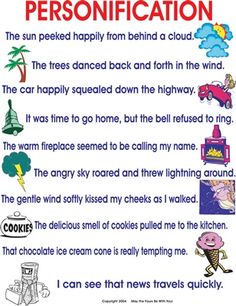
I started by using the Visual Thinking Strategy which was created by Abigal Housen, a cognitive psychologist in the Harvard Graduate School of Education. According to her theory, students learn the most when they have opportunities to interpret visuals for themselves. So I put up the picture of the newspaper with a hand (the last visual on the “student handout” sheet). I simply asked, “what do you think this picture is representing? Why?” and had students do a turn and talk. I made sure there were no words on this flipchart accompanying the picture so students had the opportunity to understand that there were no right or wrong answers and to produce an authentic answer. Student responses included things along the line of “There is a newspaper that seems to be going somewhere or traveling”. After the class came to a consensus on this, I revealed the phrase next to it which said, “News travels quickly” and immediately got responses like “Wait, news can’t travel!” and produced a debate among other students about what this really meant. Using this visual opened the conversation about things being literal and figurative. This way students were creating the definition prior to reading the personification sentence. In a way, they already knew what the personification meant before reading the figurative language. They were working backwards relying solely on the visual.
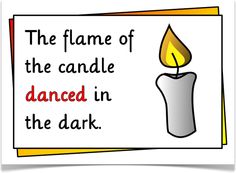
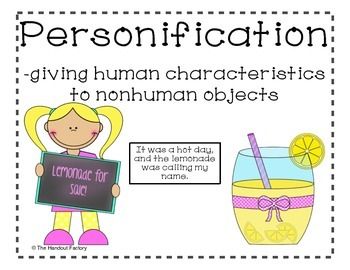
After doing a few more Visual Thinking Strategies, students were able to create their own definition of personification. They realized that nonhuman objects were being given human like qualities. I then pointed to the visual of the lemonade poster/personification definition which hangs in my room. This visual aided students who were having a hard time grasping the concept by having a concrete definition there accompanied by another pictoral example. I then went back to the Visual Thinking Strategy and used the picture of the dancing flame (below). This time students were aware that we were looking for figurative language but responded similarly to the question “what do you notice?” All students were able to say a flame going back and forth. When I revealed the sentence “the flame of the candle danced in the dark” students were able to quickly make the connection that the flame was not actually dancing but it was flickering in the darkness.
The last visual I used was the personification handout (below). At first the words were covered up. Students were tasked with looking at the picture and guessing what the personification sentence might be and then checking it with the actual sentence. This forced students to try to create their own human quality for a non human object, going one step further than how I used the previous visuals. The visual aided them in coming up with a sentence but this was a lot more challenging for them than just interpreting sentence with visuals.
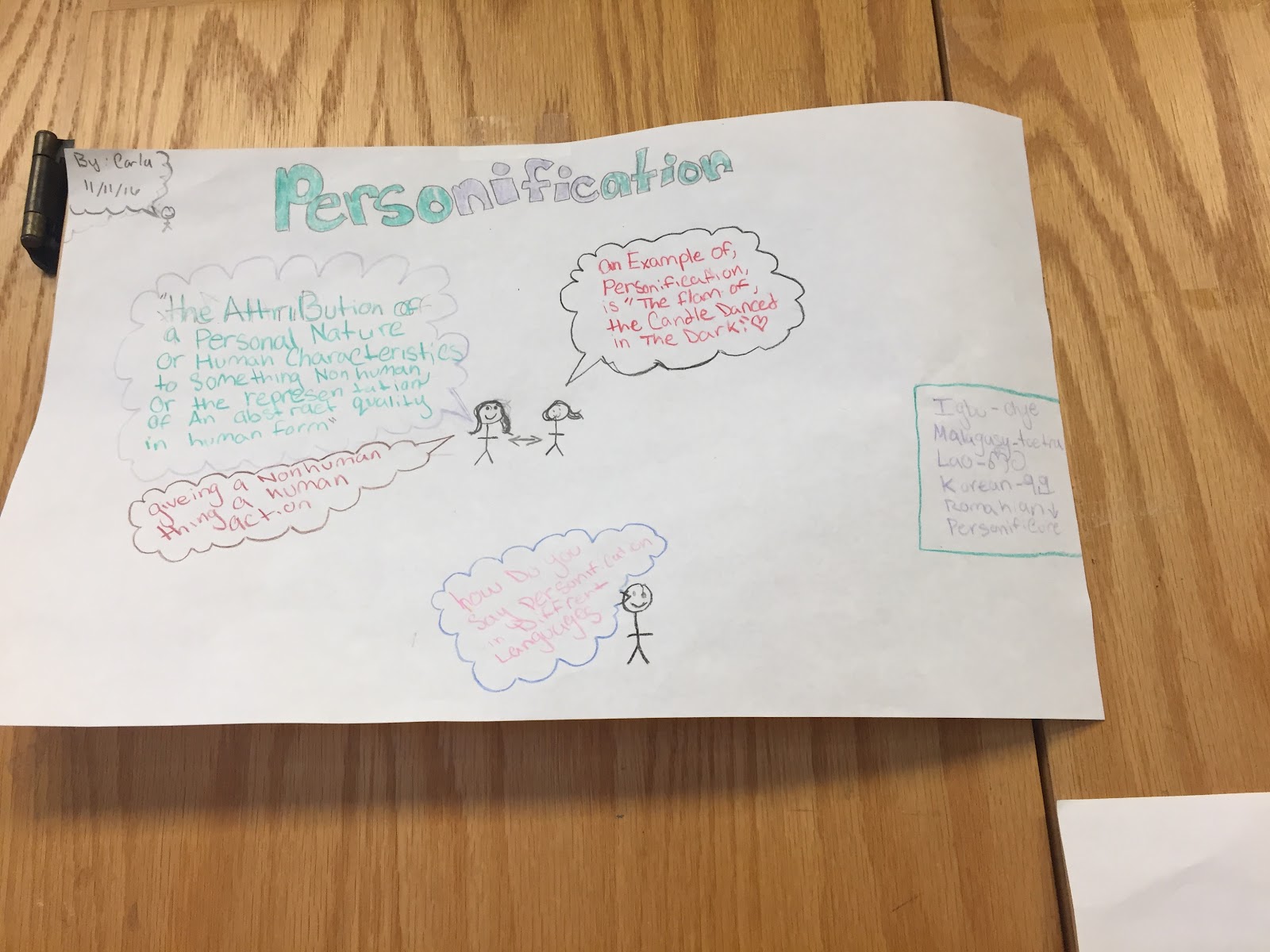
I used three pieces of evidence to gauge if visuals aided students. The first piece of evidence had students interpret the meaning of personification sentences. The evidence of student work below showed me that the student was effectively able to use the visuals and anchor chart I gave her to understand that the sentences were not literal and each object was given a human quality. The second piece of evidence had students create their own personification sentences given a prompt. The evidence showed that the student was able to take the visuals we discussed and create sentences based on what we learned. However, the evidence showed a misconception that wasn’t captured in the visuals we studied. In numbers four and five she wrote a simile rather than personification. Next time when considering which visuals I use, I’ll put a comparison visual up that contrasts a simile with personification. The third piece of evidence was a mini project on personification where students did research by coming up with a definition and picture to support their understanding. This showed me how they could create their own visuals to support their learning rather than just interpreting visuals.


Evidence:


Examples on flipchart:


Handout given to students:


Student created posters

Tuesday, February 21, 2017

Mid-Year Conferences

Conferences just happened last week and I as I was preparing for them, I thought a lot about the purpose of mid year conferences and how they can look different from our Fall conferences. A lot of the conference was dictated by the goal setting sheets we prepared for each individual student. However, how I chose to utilize it for mid year conferences differed a lot from Fall conferences. At this point in the year, I have built solid relationships. I put a significant amount of time ensuring families showed up to Fall conferences but this being the third round of conferences for fifth grade families, I already knew what attendance would look like and who I would have to reach out to individually to ensure they were present. Based on this, I had all but two families attend. I viewed the first set of conferences as a time to build relationships, the second round of conferences to set goals and used this round of conferences to talk about how we are doing towards reaching those goals using the data sheet (below).
As always, attendance was the first thing we discussed for a quick minute. We also included tardies this time which was different than Fall conferences which can be seen in the artifact below. If students were present for less than 95% of the year so far, we discussed the importance of class time for learning and if there was anything I could do to better support families and students in ensuring they are present in class everyday. This was a quick conversation but was an important piece that I wanted on the data sheet to emphasize that in addition to academics, this was a crucial piece of for succes year long.
The next part of the data sheet shows reading goals and current reading levels. I inputted the general metrics for what a passing score on the MCA from last year looks like, what letter passing is on the F&P reading test and what proficiency looks like on the district interim test. Having levels of mastery helped lead a conversation about where students should realistically be at this point in 5th grade if they were not there yet or if they were surpassing it. However, also having the goals we set for growth on the data sheet helped inform families and students where they are at in meeting goals rather than just looking at mastery. Surprisingly, the growth versus proficiency conversation dominated a large part of conversations. It was insightful for families to see how even if students were not mastering content yet, their growth levels painted a different picture.
The back side had math growth and proficiency. However, this time we focused on Fast Bridge reports (measure of growth) and district interim tests (measure of standards mastery). While not on the artifact attached, there were Fall fast bridge measures which gave families an indicator of how much growth was made to the winter levels. We also had a chance to discuss their projected score on the MCA based on MDE projections as well as the goals we set together. This is also on the data artifact. Just like reading, this provided a great opportunity to discuss why it was okay that students were not necessarily passing the MCA at a 550 but rather they were making growth towards passing based on their fourth grade scores. The language proficiency and social/emotional skills at the end provided a good reminder of where students were at their ESL levels and how they were progressing socially/emotionally. This part of the artifact helped families and students see how social/emotional growth intersects with academic growth.
Overall, the conference data sheet met my goals for the third round of conferences. It gave students and families an understanding of where they are and how much work needs to be done to meet goals. It made the data more concrete and visible to them which I found to be more impactful than just verbally stating goals. According to John Hattie (Visible Thinking), lesson goals and clear intentions promote higher student results and engagement. Therefore, while the overall generic data points were helpful for students to see where they are at, I want to make sure I also break it down more for each student to have clear learning goals for each subject. Based on that, coming out of the conferences I also set a specific learning goal for both math and reading with students.


Friday, February 3, 2017

Ross Greene and Lagging Skills

“The Explosive Child” has become an integral part of how I support students who need extra practice with skills to be able to do their best in the classroom. The quote that has really driven how I change my response to “behaviorally challenging” students is, “Behaviorally challenging kids are challenging because they’re lacking the skills to not be challenging” (pg. 9). Using this quote, I was able to adapt how I responded to the top three challenges I had with one of my students. I understood the skills he was lacking that caused him to react to situations in the way he did. This in turn helped me understand how to best support him. This relates to Vygotsky's idea on the zone of proximal development. These are skills that are too difficult for children to master on their own, but with guidance and encouragement from a person who has those skills they can quickly move to the independent stage.
When Carlos got upset by his classmates he would start yelling or just say, “Shut up!” really loudly. At first I would explain to Carlos that we need to switch our language and come to me when something was bothering him. This didn’t seem to work and it was hard for me to comprehend why he was responding with screams and inappropriate language each time he was trying to express something to his classmates. After going back to the quote, I understood the skill that he was lacking, as referenced by Ross Greene on page 9 was language processing and communication skills. He clearly had difficulty expressing concerns, needs, or thoughts in words. Rathern than saying, “It bothers me when you talk loudly because it gives me a headache” Carlos would result to “Shut up!”. I realized that asking Carlos to take a break or just change his language wouldn’t do anything to develop this skill. So instead, we have been actively working on phrases and words he can use when he is experiencing frustration to communicate his thoughts.
Second, whenever Carlos faced a challenge or got frustrated, he would respond only with his emotions. For example, if he was struggling answering a reading comprehension question, he would tighten up his fists and his face would get really red. Or, if someone teased him he would respond in the same way. My initial reaction would have been to have him take a break and relax his body but I realized that wasn’t getting at the root of the issue because he would always react in the same way. Thinking about Greene’s quote about lacking a skill, I realized that he had difficulty managing emotional response to frustration in order to think rationally. The skill he was lacking was using thought in finding solutions rather than pure emotion. Therefore, Greene’s idea of finding the lagging skill has helped me understand that I need to work on incorporating thought into decision making skills rather than focusing on the emotion.
Last, at times it seemed that Carlos “knew what buttons to push”. If I did a countdown from 5, he would be the only one continuously talking. Or, when everyone was seated, he would run around the room or get up and wander as he pleased. However, thinking about the concept of lagging skills, it became clear that Carlos would do things that seemed irritating at times when he was having trouble adapting or being flexible to the situation at hand. So rather than thinking about it as “why is he intentionally trying to irritate me” my mindset has shifted to “what skills can I teach him to improve on his flexibility and adaptability in new situations”.

Saturday, December 10, 2016

Adapting Curriculum


Minneapolis Public Schools gives schools a curriculum to follow for our literacy instruction. Often times the curriculum that is given feels frustrating when planning because the way the standards are told to be taught don’t take into account student experiences, language needs, and the way my students learn. Therefore, when lesson planning and enacting lessons, I focus on using the curriculum as a skeleton while inputting what I know about my students and skills outside of the standards that need to be worked on. This video shows what students are doing after I have adapted the curriculum to still meet the standards. The standards that students are working on in this video are 5.1.6.6 (describe how a narrator’s or speakers’ point of view influences how events are described) and 5.8.1.1. (engage effectively in a range of collaborative discussions). The learning objectives coinciding with these standards was, “With a small group of peers, I can identify examples of memoir characteristics in ‘Reverend Abbott and Those Bloodshot Eyes’ by Walter Dean Meyers” and “I can discuss a short story with a small group of peers”.
The first adaptation that was made was the text that was read. The curriculum instructed teachers to read ‘Reverend Abbott and Those Bloodshot Eyes’. However, taking into account our students developmental age and experiences, that piece of text had more to do with a child’s experience with a Reverend and “Boot Ladies” among other concepts that students did not have relatable experiences with. As can be seen in the video, Ingrid and Carla are discussing another chosen text “Why I Never Ran Away from Home”. This text is more developmentally appropriate and relatable to students’ lives. As shown at 1:25 Carla makes a connection to the text based on something she did over Halloween and at 2:21 Ingrid makes a connection to her cousin. Both these pieces of thinking show me that the text is relatable to personal experiences which makes for productive readings.
According to Wolf, Crosson, and Resnick in “Classroom Talk for Rigorous Reading Comprehension Instruction”, collaborative dialogue between peers is necessary to increase comprehension. Furthermore, close reading strategies, such as annotations, increase that comprehension. The curriculum instructed students to independently annotate the piece of text and then have a discussion with the teacher about the characteristics of a memoir. However, I adapted that to have students annotate together and verbalize their thinking as they annotated. Wolf, Crosson, and Resnick cite a study by Brown et al. (1993) that their “...study reported that use of collaborative dialogue during the reading comprehension lessons was positively associated with the students’ gains in building knowledge and comprehension” (pg. 2). Based on this, I wanted to infuse student led discussion in every component in the lesson. While this is not necessarily a student led questioning of the text as the study likely anticipated, it encourages students to verbalize their annotations together and use accountable talk to justify and show their listening skills when listening to their partner. For example, in the video at 3:16 Carla uses the accountable sentence stem “Can you tell me more?” to encourage Ingrid to justify her answer. Just this piece of justification between students can increase comprehension according to the piece of research by Brown. By adapting the curriculum in this way, I was able to hit the standard of annotating while infusing more collaborative talk.
Third, the theory on reciprocal teaching states that students should become the leaders and teachers in small group reading and the discussions should be student led. Instructional approaches like these, according to Wolf, Crosson, and Resnick, “...acknowledge that reading comprehension is a collaborative process where the teacher and students co-construct meaning from the text” (pg. 3). The curriculum did not provide any room for this while students were doing their annotations and discussing the text. Therefore, I decided to add it in to boost student based discussions and comprehension. As can be seen in the video, I am not present in order to keep the activity student led. At 0:17 you can see Carla and Ingrid deciding on their own who is going to talk and annotate next rather than me telling them who should go first. This gives students more autonomy. The collaboration portion between students and teachers that Wolf, Crosson, and Resnick refer to happens at the end of the lesson where students share their ideas with me.
The curriculum also had students (independently) “annotate the text” without providing any scaffolds for what this could look like. As can be seen in the video, around 0:39 (and other places), Carla and Ingrid have a blue annotation bookmark that is guiding their annotations. They are putting “!” when something surprises them, a star for an important event (key characteristic of a memoir) and underlining and commenting on feelings (another key characteristic of a memoir). This scaffold gives them a place to start with how to record their thinking. Therefore, they are still meeting the curriculum expectations for annotating. This also provides a scaffold for finding important parts of a memoir (learning objective). They are able to use the annotation bookmark and find the important events and feelings and then go back and write about it.
While this video only shows a short piece of this lesson, I hope to improve on self-guided discussions. Carla and Ingrid discussed their annotations well but according to the research cited above, they should be leading own discussion circles with more peers. The video showed only two students interacting. Therefore, when the curriculum has students doing independent work with text or teach led work, I am going to strive to incorporate more student based discussions within the curriculum.

Wolf, Mikyung Kim, Crosson, Amy,  and Resnick, Lauren. “CLassroom Talk for Rigorous Reading
Comprehension Instruction”.  American Educational Research. 2004.


Sunday, November 27, 2016

Procedures


Procedures Video

Procedures are a critical component of ensuring students have consistency, understand how our routines work and translate into efficiency within the classroom. According to Harry Wong’s theory of classroom management, “Ineffective teachers begin the first day of school attempting to teach a subject and spend the rest of the school year running after the students. Effective teachers spend most of the first two weeks of the school year teaching students to follow classroom procedures” (The First Days of School). Therefore, I spent a lot of time teaching students effective turn and talk procedures, using agree/disagree signals, calling attention from a count down from 5, and silent signals (for the bathroom, drink of water, tissue, and pencil) the first few weeks of school. This video shows how these procedures have culminated after two months of repetition. According to Harry Wong’s research in effective classroom management, teachers should use a three-step approach for teaching classroom procedures. This includes explaining, rehearsing, and reinforcing (repetition) until students have it be a habit or routine (The First Days of School). Therefore, this video shows this in practice after being on stage three of his approach.
During morning meeting, students have incorporated 4 main procedures. First, students do a turn and talk. When this was first taught, I held students accountable to turning their bodies, facing their partners, looking them in the eye, and talking to them in order to teach social skills. Second, I wanted to ensure students were talking about the topic and not something completely off topic. This was modeled by showing that we can ask questions about the topic that might get us off topic but we cannot talk about anything completely off topic. The video shows that the majority of the class is doing this. At 1:20 you can see the girls in the front turning their bodies and engaging in conversation and the boys in the back turning their bodies and talking. However, three of the boys in the back of the room were not facing each other but still engaging in a conversation. I think for the small percentage of my class who need to work on the actions of the procedure, I will need to work on Wong’s second step of rehearsing under my supervision. The other part of the turn and talk (ensuring students are talking about the topic) is an area I still need to work on. When I am engaging in a turn and talk with students, it is difficult for me to be sure that 100% of students are on topic. Therefore, a strategy I might use for next time during the share is to have students share what their partner said so they are listening to each other and staying on topic.
The second procedure I implemented from the first day is an attention getter. I do a countdown from 5 to get students’ attention. The expectation is that by the time I reach 1, all students have their voices off, their bodies are frozen, and eyes are on me. At 2:45 you can see me doing the countdown. As I start on 5, students are already turning their bodies to face me, their voices are turning off, and their bodies are frozen. As I continue to talk some students are looking elsewhere but may still be engaged in what I am saying. I anticipate this being in Wong’s third step of reinforcing. Keeping eye contact with the speaker even after the countdown from 5 is important to show listening skills. Therefore, it is something I will continue to reteach, rehearse, and practice until it becomes routine. In order to reteach “eyes on me” I can connect a lesson we have already done in Second-Step about what active listening looks like to how students are showing me that they are listening with eye contact. I can have an accountability slip where they check-mark the amount of times a day they are not only keeping their eyes on me, but their eyes on a speaker in general.
The third procedure this video highlighted is using agree/disagree signals. Rather than yelling out that something excited them or they don’t like a certain food, students are encouraged to use silent signals. This also shows that they are actively listening since they have to form opinions based on what someone else said. Around 2:50 you can see me prepping the class to use silent signals when others are sharing. At the beginning, the majority of the students were doing the silent signal. Near the end, nearly no one was doing it anymore. Silent signals is in stage two of Wong’s three step approach for teaching classroom procedures. It is a procedure that needs to be rehearsed and practiced underneath my supervision. Students still need to be reminded to use it (2:50) and 100% of students are not consistently using it. In order to revise this procedure, I will continue to remind students to use silent signals at the beginning of something I want them to be actively listening to. In the beginning, if I don’t see 100% of students showing a silent signal, I will have the class retry the procedure until it becomes innate to doing it. I can also use an accountability buddy system by assigning each student a buddy and that buddy is responsible for making sure their partner is giving a silent signal.
The last procedure that was slightly evident in the video was silent hand signals for important things that might be common throughout the day (bathroom, water, tissue, and pencil). At 1:41 you can see the student is turning and talking to me give a two fingers crossed sign to me even though he is talking to me. He knew to use a silent signal to ask me to go to the bathroom rather than saying it outloud. While this video shows limited evidence of this procedure, it is something I continually work on throughout the day. 60% of my class is able to use the silent signals and patiently wait until I give them a nod yes or no for what they need. There is still 40% of the class that is in stage two of rehearsing and part of stage one of explaining. To reteach this procedure with 40% of those students, I will explain why we use silent signals (provides a flow in the classroom, no interruptions, and efficiency). Once they understand, every time they verbally ask me to do one of those procedures I will not respond until they show me a silent signal. That way, under my supervision (phase two/rehearse) it will eventually become routine.

Sunday, November 13, 2016

Analyzing Student Learning


Student Work (ignore the number line on the bottom, that is part of the second question not analyzed with this learning objective and data)


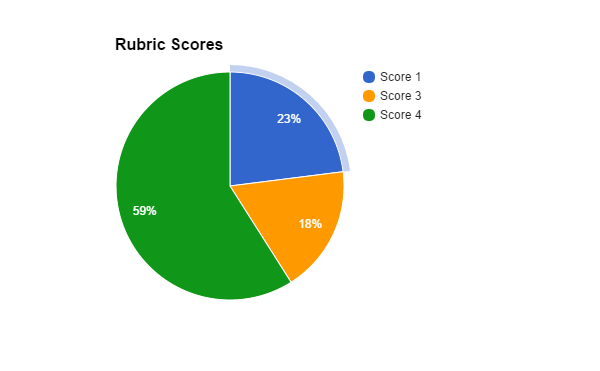
The rubric provides a guideline for categorizing student mastery. If students scored a 4, they were able to correctly order all 5 fractions from least to greatest and show correct reasoning through a strategy that they were comfortable using. If students scored a 3 it could mean two things. Either students misplaced one fraction (but knew how to correctly order all the other fractions from least to greatest) or students correctly ordered 3 fractions but mixed up the other 2 fractions. If students scored a 2 it meant that they could only correctly order two of the fractions but mixed up the other three fractions and could not put them in the correct order in relation to the other three fractions. If students scored a 1 it meant that they could possibly identify the largest or smallest fraction but could not order the rest of the fractions or they could not correctly order any of the fractions.
The data shows that over half the class is correctly able to show a strategy to order all 5 of the fractions from least to greatest. Looking at Andy’s work which is very similar to the other students who scored a 4 on the rubric, they understood three big ideas that helped them place the fractions in correct order. First, looking at Andy’s work, he knows that whenever you have 1 out of a certain number  (such as ¼), it will be less than only having one left (such as ⅞). Therefore, he knew that ¼ and ⅕ had to come before ⅞ and 8/9. Second, he understood that fourths were larger than than fifths so when you eat 1 out of 5 pieces, you are eating a smaller amount. That thinking is shown through his visual representation when he adds dotted lines to the fifths representation to turn it into fourths and writes “smaller” to show that a fifth is smaller than a fourth. Third, he was able to successfully convert the improper fraction into a mixed number and then understand that half is bigger than the fifth and fourth but less than the ⅞ and 8/9. Both the data and student work show that over half of the class is able to do these three items to show their thinking.
When looking at the data, it looks like at first glance 18% of the class is having trouble with ordering one or two fractions. However, when looking closer at student work, there is a consistent misconception. Students did not understand how to convert an improper fraction into a mixed number or didn’t understand what the improper fraction meant. All of the students made the same error and had the same misconception that 39/6 was the largest because of the 39 on the top. This can be seen in Maggie’s work. To clarify this misunderstanding, I will have these students draw out what 39 sixths looks like with pre-drawn bars cut into six pieces to save time. This will translate into understanding that this fraction really represents 6 and 3/6 and is not the largest number when compared to the other drawings.
Last, when looking at the data that shows rubric scores at a 1, it looks like over 20% of students cannot order fractions at all. However, when digging deeper nearly all the students had a conceptual understanding of whether ¼ vs. ⅕ was larger and ⅞ vs. 8/9 using the same reasoning as above. However, when it came to comparing ¼ and ⅕ to ⅞ and 8/9 students did not know which one should go first or last. They did not have an understanding that ⅞ and 8/9 is closer to one whole so it is larger than ¼ and ⅕ which is just one piece out of a whole. They also did not have an understanding what 39/6 represented. Most of them placed this fraction in random spots but nearly all of them consistently put ¼ after ⅕ and 8/9 after ⅞. To address this common error I will have students draw out each of the fractions to visually see the difference between taking only one piece out of a whole vs. only having one piece left. You can see in Irvin’s work that he was not making connections across the fractions but just for the fractions that look similar (¼ and ⅕   ⅞ and 8/9). Another strategy is to use paper strips to have students engage with the fractions in a hands on way to see what each of the fractions look like. I would have these students draw out 39 sixths as well, similar to the group of students scoring a 3 from the rubric. After the visual representations, for the group scoring a 3 on the rubric, I will hand out two student copies of correctly placing a different improper fraction in order and one that incorrectly places it. I will have students work in pairs to justify which paper was correct and which paper was incorrect. I will do the same for the group scoring 1’s on the rubric but orient it more towards misplacing the 1 out of a number and having only one piece left out of a whole.
The last noticing from the data was that 2 of my ESL students who scored a 1 on the rubric scored a 1 due to placing the fractions from greatest to least (in addition to not knowing what to do with the 39/6). These students might need additional support with language of “greatest” and “least” to understand how to order in that direction.